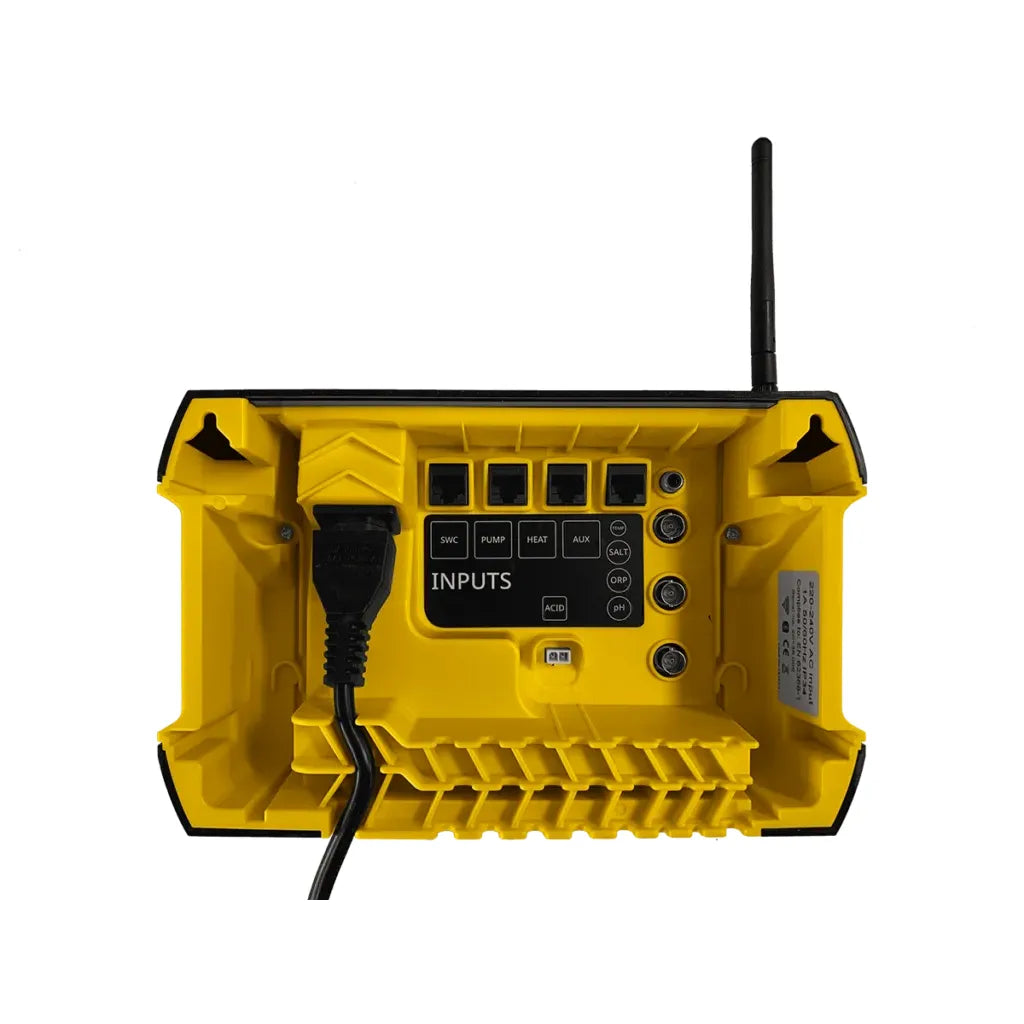


Davey ChloroMatic Lifeguard Pool Chlorination & Chemistry Control System
Davey ChloroMatic Lifeguard Pool Chlorination & Chemistry Control System
Couldn't load pickup availability
- Easy Returns
- Fast Shipping
The Davey ChloroMatic Lifeguard combines salt chlorination, automated chemistry control and pool equipment management into one integrated system.
Designed for in-ground and above-ground residential pools, Lifeguard monitors and controls key pool functions including chlorine production, pH and acid dosing, ORP, salt level, filtration schedules and temperature control. WiFi and Bluetooth connectivity provide access through the integrated iOS and Android app for remote monitoring, control and alerts.
Five models are available, covering normal-salt and low-salt pools with chlorine outputs from 15 g/hr to 35 g/hr and maximum pool sizes up to 140,000 litres in cool-climate conditions.
Model Options
Dropdown: Model
| Model | Chlorine Output | Salt Range | Cool Climate <25°C | Temperate 25–30°C | Hot/Tropical >30°C |
|---|---|---|---|---|---|
| DCLG-15C | 15 g/hr | 3000–6000 ppm | 60,000 L | 48,000 L | 36,000 L |
| DCLG-25C | 25 g/hr | 3000–6000 ppm | 100,000 L | 80,000 L | 60,000 L |
| DCLG-35C | 35 g/hr | 3000–6000 ppm | 140,000 L | 112,000 L | 84,000 L |
| DCLG-15CLS | 15 g/hr | 1500–6000 ppm | 60,000 L | 48,000 L | 36,000 L |
| DCLG-25CLS | 25 g/hr | 1500–6000 ppm | 100,000 L | 80,000 L | 60,000 L |
Normal Salt Models
DCLG-15C, DCLG-25C and DCLG-35C
Designed to operate at salt levels from 3000–6000 ppm.
Choose between 15, 25 and 35 g/hr chlorine production depending on pool volume, water temperature, climate and bather load.
Low Salt Models
DCLG-15CLS and DCLG-25CLS
Designed to operate from 1500–6000 ppm, making them suitable where a lower pool salt concentration is preferred.
Available with either 15 or 25 g/hr chlorine production.
Why Choose the Davey Lifeguard?
- Integrated salt chlorination and pool chemistry control
- Automatic pH sensing and acid dosing
- ORP control for chlorine management
- Salt level measurement
- Pool temperature monitoring and control
- Variable-speed pool pump control
- Heat pump temperature control
- WiFi and Bluetooth connectivity
- Integrated iOS and Android app
- Adjustable filtration and chlorination schedules
- Normal, Boost, Spa, Cover and Winter operating modes
- Reverse-polarity chlorinator cell for reduced maintenance
- Integrated safety flow switch
- No-flow detection with cell safety cut-off
- Digital displays with timers, alarms and adjustable chlorine output
- Battery backup for blackout protection
- UV-stabilised enclosures
How It Works
The Lifeguard produces chlorine from salt dissolved in the pool water using its reverse-polarity chlorinator cell.
At the same time, the system can monitor pH and automatically control acid dosing. ORP control provides an additional method of managing chlorine demand, while integrated salt and temperature measurement gives the controller the information needed to manage the pool more effectively.
Lifeguard can also coordinate filtration, a compatible variable-speed pool pump and heat-pump temperature control, reducing the number of separate controllers required around the pool equipment area.
The integrated app provides remote access to operating information, settings and alerts. Remote control can also be disabled when required.
Best Suited For
- In-ground residential swimming pools
- Above-ground residential swimming pools
- Salt-water pools
- Mineral pools
- Normal-salt installations
- Low-salt installations
- Pools using variable-speed pumps
- Pools requiring automated pH and chemistry management
- Pool owners wanting app-based monitoring and control
Model Selection Guide
The maximum pool volume depends on pool water temperature, local climate and bather load.
A 25 g/hr model, for example, is rated for up to:
- 100,000 L below 25°C
- 80,000 L between 25°C and 30°C
- 60,000 L above 30°C
Higher water temperatures and heavier pool use increase sanitiser demand. Do not select a model on pool volume alone where the pool has unusually high bather load or warm operating temperatures.
Chlorine Output
| Output Model | Chlorine Gas Production | 65% Calcium Hypochlorite Equivalent |
|---|---|---|
| 15 g/hr | 15 g/hr | 23 g/hr |
| 25 g/hr | 25 g/hr | 38 g/hr |
| 35 g/hr | 35 g/hr | 53 g/hr |
Key Specifications
| Specification | Details |
|---|---|
| Voltage | 220–240 V |
| Phase | Single phase |
| Supply frequency | 50/60 Hz |
| Enclosure class | IP34 |
| 15 g/hr maximum power | 0.12 kW |
| 25 g/hr maximum power | 0.24 kW |
| 35 g/hr maximum power | 0.24 kW |
| Normal salt operating range | 3000–6000 ppm |
| Low salt operating range | 1500–6000 ppm |
| Integrated flow switch | Designed to accommodate flow down to 80 L/min |
| Cell connections | 40 mm and 50 mm options |
Component Dimensions
ChloroMatic Nipper Controller
- Height: 320 mm
- Width: 238 mm
- Depth: 113 mm
- Mounting-hole spacing: 164 mm
Lifeguard Controller
- Height: 153 mm
- Width: 240 mm
- Depth: 97 mm
- Mounting-hole spacing: 205 mm
Cell Housing
- Height: 239 mm
- Width: 390 mm
- Diameter: 119 mm
Pool Control Features
Automated Chemistry Control
The Lifeguard incorporates pH sensing, acid dosing, ORP control and salt measurement to help automate day-to-day pool chemistry management.
Pump & Heating Control
Variable-speed pump and heat-pump control can be integrated with the Lifeguard, allowing filtration, sanitising and temperature functions to work from the same control system.
App Control
WiFi and Bluetooth connectivity work with the integrated iOS and Android app for control, operating information and alerts.
Flexible Operating Modes
Dedicated modes include:
- Normal
- Boost
- Spa
- Cover
- Winter chlorine reduction
Schedules can also be adjusted to suit the pool's normal operating pattern.
Reverse-Polarity Cell
The high-performance in-line cell uses reverse-polarity technology to reduce scale accumulation and simplify normal maintenance.
The cell housing uses barrel unions for installation flexibility and incorporates a safety flow switch.
In hard-water applications above 275 ppm, the cell should still be inspected regularly. Monthly inspection and manual cleaning may be required.
Installation
The Lifeguard is designed as an integrated chlorination and chemistry-control system with straightforward programming and pool equipment integration.
The cell housing supports 40 mm and 50 mm connection options, allowing it to suit common pool plumbing configurations.
Installation and commissioning should follow the applicable Davey installation and operating instructions.
Maintenance
Actual chlorinator running time will vary with pool size, water temperature, chlorine demand and bather load.
General operating guidance is:
- Summer: approximately 6–8 hours per day
- Winter: approximately 2–4 hours per day
Reducing unnecessary winter run time can also help extend cell life.
For hard-water applications above 275 ppm, inspect the reverse-polarity cell regularly and manually clean it where required.
Warranty
- Control box and cell: 3 years
- Accessories: 1 year
- Probes: 6 months
Important Note
The smartphone shown in product imagery is not included.
FAQs
What is the difference between the C and CLS models?
The C models operate at normal salt levels of 3000–6000 ppm. The CLS models are low-salt versions operating from 1500–6000 ppm.
Which model do I need?
Match the chlorine output to your pool volume and operating temperature using the model table above. Bather load also affects chlorine demand, so heavily used pools may require additional capacity.
Does Lifeguard automatically control pH?
Yes. The system incorporates a pH sensor and acid dosing control.
Does it have ORP control?
Yes. ORP control is integrated into the Lifeguard chemistry-control system.
Can I control it from my phone?
Yes. Lifeguard has WiFi and Bluetooth connectivity with an integrated iOS and Android app for control, information and alerts.
Can it control a variable-speed pool pump?
Yes. Variable-speed pump control is one of the integrated Lifeguard functions.
Can it control pool heating?
The system supports heat-pump temperature control.
Does reverse polarity mean the cell never needs cleaning?
No. Reverse polarity reduces maintenance, but hard-water installations above 275 ppm may still require monthly inspection and manual cell cleaning.